Sunday, March 27, 2016

Dhoruba Bin-Wahad Calls The Tune


As many of my Faithful Readers know, I've always posted a good bit about prison and prisoners. Ever since I joined the collective at the National Prison Center and the staff of the Prisoners Digest International back in 1971, I've considered myself a member in good standing of the prison abolition movement. I've written for publication about prisoners rights. I went into Ft. Madison Maximum Security Penitentiary in Iowa as a Sealed Revelation Minister with the Church of the New Song. I've testified in court. And I've visited -- or tried to visit -- a number of prisoners in multiple states for a range of reasons.

I've counseled prisoners and ex-prisoners and trained others to have a clue about the issues people deal with when re-entering the outside world. I've written letters to judges that helped people get out or stay out of jail. I've taken endless phone calls and written literally hundreds of letters to people inside. I've done political actions related to prisoners rights, some in groups and some alone. I've supported several long-term political prisoners through their ordeals until they were finally freed (the latest being Albert Woodfox, who was released the 19th of last month after 43 years in the hole). And I scared the be-jezzus out of at least one Federal Chief of Classification and Parole who I sent into an apoplectic fit by telling him -- very quietly, I swear -- that he was going to be held accountable for his cruelty.

So it shouldn't surprise anyone what I'm about to do. For the next few weeks, I'm going to post a whole string of items having to do with the criminal injustice system and most particularly, prison. I've been sitting on some of these things for a while and I have some real beauties in store, not the least of which is the entire report on the 2011 investigation into the alleged misconduct of New Orleans Police Department Deputy Chief Marlon Defillo (which is part of the public record, so it can be published, and believe me, it's quite something).

But before I get into all that, I want to pause a moment and introduce a YouTube video of former Black Panther leader Dhoruba Bin-Wahad speaking at Hamline University in Minneapolis, Minnesota, in 2010. The broad topic is U.S. governmental repression and imperialism, but he drops it into a historical and global context and shows how the U.S. ship of state has used and is using its  power to try to crush opposing forces and individuals, such as Bin-Wahad himself, who did nineteen years as a prisoner in New York before he was exonerated and freed in 1990. I'll warn you in advance that it's ninety minutes long, but if you'll watch the first ten minutes, I guarantee you'll watch the rest and very likely in one sitting -- the way I did.

Law enforcement and the criminal injustice system are the line between the public and the state. Bin-Wahad's presentation is the perfect introduction to a month of examining that line.

_______________________________________________________
NOTE: If you want to know more about Dhoruba Bin-Wahad's personal journey in the system, get "Passin' It On," which is one of my favorite documentaries of all time.

Sunday, March 13, 2016

Fire!

This is what I woke up to on Facebook this morning -- a video of a fire that had been set in the Holman Correctional Center in Atmore, Alabama. And I'm sure most viewers in the United States will look at this, shrink back from the screen, and shake their heads, saying, "That's why they're in there. They're right where they belong. We don't want them out here with the rest of us..."

But I'm reminded of something I wrote for the Prisoners Digest International back in 1973 when the prison in McAlester, Oklahoma, went up in flames. I am reprinting it here dedicated to the men in the HCC who are, I'm sure, this morning suffering greatly and as far as I'm concerned through no fault of their own.

"The Fire"
by Becky Hensley, SRM, EcD
(PDI, Vol. 3, Issue 3 - 8/1/73)

"Burn, baby, burn!" and the smoke rolled out -- for forty miles you could see it touch the clouds. "Those animals," says Mrs. Johnson, six miles down the road. "They're burning tax dollars of hard-working citizens!"

They're burning your heart, not your cash, Mrs. J. They would set you on fire along with the "overworked" attorneys and underpaid prisoners' rights groups and pompous, phony legislators and silent ex-prisoners and uncaring mothers and hot-pantied girl friends and all the rest of those millions of hard-working, tax-paying citizens who sit on their hands 'cause it feels so good and suck Uncle Sam's tit when they can't reach his crotch.
Sit down, thirty-one-sixty-nine-twelve, you're trying to thaw out a freezer with a three-thousand-mile diameter. Why can't you learn to sit on your hands, too? Society wants you. It has big plans for its prisoners...
Listen to the smoke, folks. Listen to the smoke go forty miles or forty years or forty more lives -- you do remember Attica? How strange. Then how many Christs will it take to satisfy the God of the People? How many nails can you drive into somebody's brain before you puke, Mrs. Johnson? Two? Ten? A thousand? Maybe more! You have a strong stomach, America, but a weak backbone.

What color is smoke made of tears, made of pain, made of law-ful petitions to unlawful courts, made of unanswered letters, made of waiting for, waiting for, waiting for waiting?

Is it the same color as the smoke belched unendingly out of the chimneys of the corporation factories and collecting in the lungs of our children? Is it the same color as the smoke that hung over Watts and Cleveland and Dante's Inferno? Is it the same color as the smoke that always exists where the plague has struck when the dead are burned with everything they touched in their dying?

Is our Spirit so dead that the flames can't ignite it? Does anyone think for a minute ole thirty-one-sixty-nine-twelve wants to die? Does anyone think for a minute that fire was started by animals? There is blood on your hands, Mrs. Johnson. There is blood on my hands. We started that fire and it won't be put out until we put it out.

S-he whose Spirit does not burn will lose their bodies to the flames and finally get just what they earn with sniveling, groveling, sweetheart games.

Play on, America -- McAlester Atmore burns.

Friday, February 12, 2016

Why Am I Not Surprised? 2.0


Yesterday, I wrote on Facebook about what it feels like to be me when I'm isolated. Which is a lot. Being a White person who thinks like me and talks about it the way I do puts me consistently on the outside all the time. This is what I wrote:
"After 45 years of fighting White Supremacy in every way I can imagine, I am getting more discouraged by the day over where we are in this country (and the world). I know that a few White people are not enough. I rant though my courses. I can hardly face my blog on race because I want to scream at the top of my lungs. People think I'm a nut case because I never let up for a minute. But what good does it do? I get some love, but most folks think I'm crazy or too over the top or pushing too hard or trying to be something I'm not or a "traitor to my race" or...other things too wrong-headed to print. I don't know what to do and I see what the White power structure is doing and it's a SYSTEM not a bunch of individuals, so it's like trying to collect smoke in a sack. 
"I've been depressed ever since Ferguson because I see that those with the power to define in this country have created a situation where Black people have to risk and lay down their lives for what already belongs to them and I am so angry, so hurt, and so helpless in the face of it all that I'm borderline suicidal off and on, but I can't quit because I'm needed. 
My only son was murdered two weeks before his 23rd birthday so I know what it is to lose a child, but every time a Black child is killed or incarcerated or beaten up or disrespected, everything Africans have suffered since the first slave ship left port for the Western Hemisphere rolls over me like an ocean wave of grief. All I know to do is to work, to fight, to stand, to write, to speak truth, and not stop -- till I die."
But this morning, I want to clarify something. This struggle is not about being a conscious White person who feels alone. It's about what the White Supremacist system does to People of Color in the world and most particularly for us, here in the U.S.

Friday, January 01, 2016

Coming Home


Ten years ago, I sat down at my computer and wrote the first post on the socially-constructed, political notion of "race" on this blog. I did it because I was teaching sociology at the University of South Florida in Tampa at the time and my students wanted to talk about race. As an adjunct, however, I had no office and no faculty privileges to speak of, so I would often wind up standing next to my car for hours after class ended at 10:00 pm. I couldn't resist the students' energy and I was learning a lot from my Black students in particular. But dragging home after midnight was not something I wanted to do on a regular basis.

So I started a small discussion group for students to attend in a conference room at the library only to decide in short order that I was now teaching a whole extra class at the university for which I wasn't being paid. Then, during Christmas break in 2005, I remembered that I had started a blog in September which I walked away from after a month of writing posts not even I wanted to read. And it occurred to me that I could change the blog topic to race and see how that went. After all, I could write it at home in my pajamas, my students could read it in the middle of the night if they chose, and rather than explaining the same things over and over and over to different students, I could answer their questions by referring them to particular posts that would remain archived online indefinitely.

It seemed like a no brainer.

Friday, June 19, 2015

Albert Woodfox: The Beat Goes On...


One of my students told me they saw this photo of Albert Woodfox and me on MSNBC last week while all the court news was breaking. I responded that I can't imagine anyone I'd rather appear on national television with than Albert Woodfox. The photo was actually taken in August of 2012, when -- for no reason we could come up with -- the Powers-That-Be suddenly decided we could have some pictures taken.

It hadn't been allowed before, even though others in the same visiting room were having them taken. And when I came back for my next visit, the "rule" had been changed again to not allow it. But on this particular weekend, acting like it was no big deal, they gave us the go-ahead and we jumped out there to grab the opportunity, never knowing until last week, it would put us together on prime time news.

Senator and Pastor Clementa Pinkney: From The Grave


May all People of Color be comforted in the knowledge that the act of killing this man and eight others at Mother Emanuel A.M.E. Church in Charleston, South Carolina, day before yesterday will fuel in millions of Americans an ever deepening commitment to root out White Supremacy and plant respect, love, and justice in its place.

Tuesday, June 16, 2015

Vinne Paz: "Keep Movin' On"


Every cell of my mind and body has been focused on Albert Woodfox this past ten days. And I'm feelin' it. My hands are trembling, my glucose level is all over the place. I'm worried for him, still sitting in a closed front cell facing what he has to fear might be the last years of his life in solitary confinement. I'm distracted and depressed, which makes me ignore the seven piles of work -- some of it fairly important and much of it with due dates -- neatly arranged on the futon in my office at home. And the further behind I get, the more despair I feel about the issues that put me in this head in the first place.

When I drove up to the jail Friday, I was thinking, hoping, we might be driving away from the place with him in tow this time. But by the time I got there, the Appellate Court ruling had been announced. He will sit there until he is re-tried unless the State drops the case or a settlement is reached (the latter two so unlikely as to be pointless to consider). And several of the family members of the guard Albert was convicted of killing (without credible evidence and utilizing every White Supremacist trick in the criminal just-us book) were on hand putting on such a show for the media, you would have thought the guy just died yesterday instead of 45 years ago. Skip that the guard's widow released a 3-page statement Thursday calling the State a liar and begging them to drop the appeal.

Anyway, I was feeling pretty sorry for Albert and for all those in prison for their politics and for all those in prison generally and for all those who work so hard to support them, until I saw this music video today and was reminded that you don't have to have broken the law or gone to prison or pushed for social change to get hung out to dry in this country. When are we going to stop blaming ourselves and each other and refuse to move on? When are we going to realize that we look different and our lives don't all play out in the same way and some of us are doing better than others on the surface, but we're all in this together? When are we going to fight back?

Sunday, June 14, 2015

Albert Woodfox: "They're Calling Me The Last Man Standing"


Five years and eleven months ago yesterday, I first laid eyes on Albert Woodfox. He was still in the Louisiana State Penitentiary at Angola then, where he had been locked up in solitary confinement almost continually since April of 1972. I had been a prison abolitionist myself for thirty-eight years at that point, so it was not surprising that we found each other. Despite the 6 X 9 foot cell in which he had been held so long, hundreds, maybe thousands, of people around the world had already found him before me. But unknown to him, when he turned 62 in February, 2009, I threw him a birthday party and invited students on the Louisiana university campus where I teach to come.

As a sociologist and long-time activist, I consider it one of my principle roles to introduce students not only to what is really going on in the world so they can become conscious of social injustice, but also conscious of the option to develop a dedicated willingness to work for positive social change. A few came out and ate some cake and learned a little about Woodfox, but I had only been at the school for three semesters and this was hardly business as usual there as yet. Still, I thought it would only be appropriate to send him a short letter and tell him what we had done.

I didn't fully realize who he was until he answered that first letter, which I didn't really expect, though I had written many prisoners over the years and they always write back. It was then that I did what journalists do and looked the man up on the internet. Reading his whole story, I was stunned. Here was a real live Black Panther Party organizer and hero ninety minutes away from me, living in a cage at the whim of a States' Attorney with what seemed to be a remarkably personal vendetta against him. I was fascinated. I almost immediately decided this was too romantic not to be kismet.

Albert Woodfox, with humility and grace, declined the offer of my heart, recommending that I read The Prisoners' Wife, instead, a painfully honest book about how prison relationships can grind the soul. I read it, but I was insulted and suspected that he was not taking me seriously or that I had simply not met his standards in some way. I did not yet understand the effects of four decades of solitary confinement, but I came to. More importantly, I eventually came to know the extraordinary person that Albert Woodfox is.

In any case, I soon gave up the fantasy of being a political icon's love interest -- but not without some chagrin and more than a little embarrassment, which he kindly never mentions. And we became close friends. We have shared forty visits -- or more -- since then, even when they moved him from Angola to a smaller prison five hours away and cut the visits to a couple of hours each. I drove it in the pouring rain (which I loathe doing). I drove it when they put him behind a glass shackled to the floor (for no reason). I even drove it while we were arguing about gender issues for a while. And yesterday morning, I drove the ninety minutes to the Parish jail where he's been held in more recent months to share with him what could very likely be his last visiting day in prison.

Tuesday, June 09, 2015

Emily Lane: Albert Woodfox Remains Jailed As Legal Maneuvers Continue


Previously published at Nola.com/Times-Picayune:  

Louisiana Attorney General Buddy Caldwell's Office has filed a notice to appeal a federal judge's ruling calling for the release of Albert Woodfox, the last remaining imprisoned member of the Angola 3, [while] Woodfox...remain[s] in state custody in St. Francisville. Woodfox has been in solitary confinement in Louisiana prisons for more than 40 years related to the 1972 murder of prison guard Brent Miller. Courts have twice overturned his murder conviction, but the state is seeking to take Woodfox to trial for a third time in the 43-year-old case.

U.S. District Judge James Brady issued a ruling Monday (June 8), listing five "exceptional circumstances" in Woodfox's case that prompted him to grant the New Orleans native unconditional release, thereby barring a third trial…

Emily Lane: After 4 Decades In Solitary, Albert Woodfox' Release Ordered By Federal Judge


Previously published at Nola.com/Times-Picayune:

A federal judge in Baton Rouge has called for the unconditional release of Albert Woodfox, the only remaining imprisoned member of the Angola 3. For more than 40 years, Woodfox, 68, has been in solitary confinement at Louisiana State Penitentiary at Angola, and other state prisons, for reasons related to the 1972 murder of prison guard Brent Miller. Woodfox has twice been convicted of Miller's murder, but courts later overturned both the convictions. U.S. District Judge James Brady issued a ruling Monday (June 8) afternoon calling for the unconditional release of Woodfox from state custody and barring a third trial of the murder charge.

Monday, June 08, 2015

Emory Douglas and the Art of the Black Panthers


Emory Douglas: The Art of The Black Panthers from Dress Code on Vimeo.

I've written more than a few words about the Black Panther Party since I first visited Albert Woodfox six years ago and I've met some pretty interesting people in the process. Brothers and sisters from another mother, some people would say. And it just keeps unfolding.

Having dinner with Angela Davis last fall when she was brought to speak on the campus where I teach, I was made to realize that it was only a couple of months after she was incarcerated back in the day that I found my way to a prison abolition collective that kicked ass nationally for a couple of years and affected the rest of my life. And I didn't even know who Angela Davis was at the time.

Last week, when I was honored to appear on the George Jackson University Radio show, it gave me an opportunity to do some reflecting on the past, present, and future of my beliefs and commitments. It's a process that continues. But suffice it to say (once more) that if you pay any attention at all, consciousness will getcha. And while not everybody is as open to Universal Truth as I can't seem to help but be, I was asked to speak just the week before to a totally different group on the topic of "Steadfast and Dedicated." I couldn't run if I wanted to.

While I figure all this out, though, and try to make a dent in the six different piles of work in my office at home, I want to let you know that the times,,,they are a-changing.

Stay turned.

Sunday, May 24, 2015

Sam Adler-Bell: "Why White People Freak Out When They're Called Out About Race"


There's been some talk around of late about "White fragility." The person that got the talk started is Robin DiAngelo, author of What Does It Mean to Be White? Developing White Racial Literacy. Some folks believe that DiAngelo is suggesting White fragility as an excuse for White Supremacy because it's been discussed as a legal defense for crimes against People of Color.

You know me well enough to know that I ain't buying any legal defense that lets White people off the hook for attacks of any kind against Black people. On the other hand, sociologists attempt to explain (not excuse) what they see. And I have said for years that White people have been very negatively affected by their being allowed to live in la-la land where their disease of White Supremacy is concerned. The condition DiAngelo calls "White fragility" could be one example of that.

"White fragility" doesn't mean people that look like me are delicate (in a good way) and need special protection or consideration. It means they are easily freaked out because of believing they're "special." (You've heard me talk about this before.) That's why I get student evaluations that say things like, "She makes White men feel bad about themselves..." And why I had one White male student stomp out of class two days in a row this semester. And why they warn each other not to take my classes: "White fragility."

Just for the record, the person who came up with this concept is not a sociologist. Still...I'm sure there are a number of folks that will find this interesting and I do believe it can be argued that living for centuries under White Supremacy has caused some White people to succumb to a condition -- whatever we choose to call it -- not unlike those dogs that have been bred for centuries to be tiny and have become as a result, in the process, high strung, yappy, and prone to pee all over the place when they get excited.

What follows is an interview wherein Robin DiAngelo explains what she meant.


Thursday, May 21, 2015

B.B. King & Friends: Night of Blistering Blues (1987)


The grades are in. The semester's over. I think I survived it. And B.B. King has gone to the ancestors. Time to chill just a minute before jumping in on this new to-do list with both feet. Wanna join me?

Sunday, May 10, 2015

Jonathan Odell: "How I Overcame My Soul-Crippling, Deep-South Addiction to Whiteness in 5 Easy Steps"


Previously posted on Alternet, 7/25/14.

I am a Mississippian as well as my family’s most notorious drunk. But six years into sobriety, I discovered that alcohol wasn’t my only addiction. Even more insidious was my soul-crippling dependence upon whiteness. I couldn't get through the day without seven or eight stiff shots of feeling superior. That began to change when I decided to write novels about Mississippi. I knew very little outside the white-bubble in which I was raised, and therefore was blind to the story of nearly half the population. Only after interviewing hundreds of black Mississippians, listening to their stories, did I begin to fathom the immensity of the lie behind my superiority and the real cost of my addiction.

Sunday, May 03, 2015

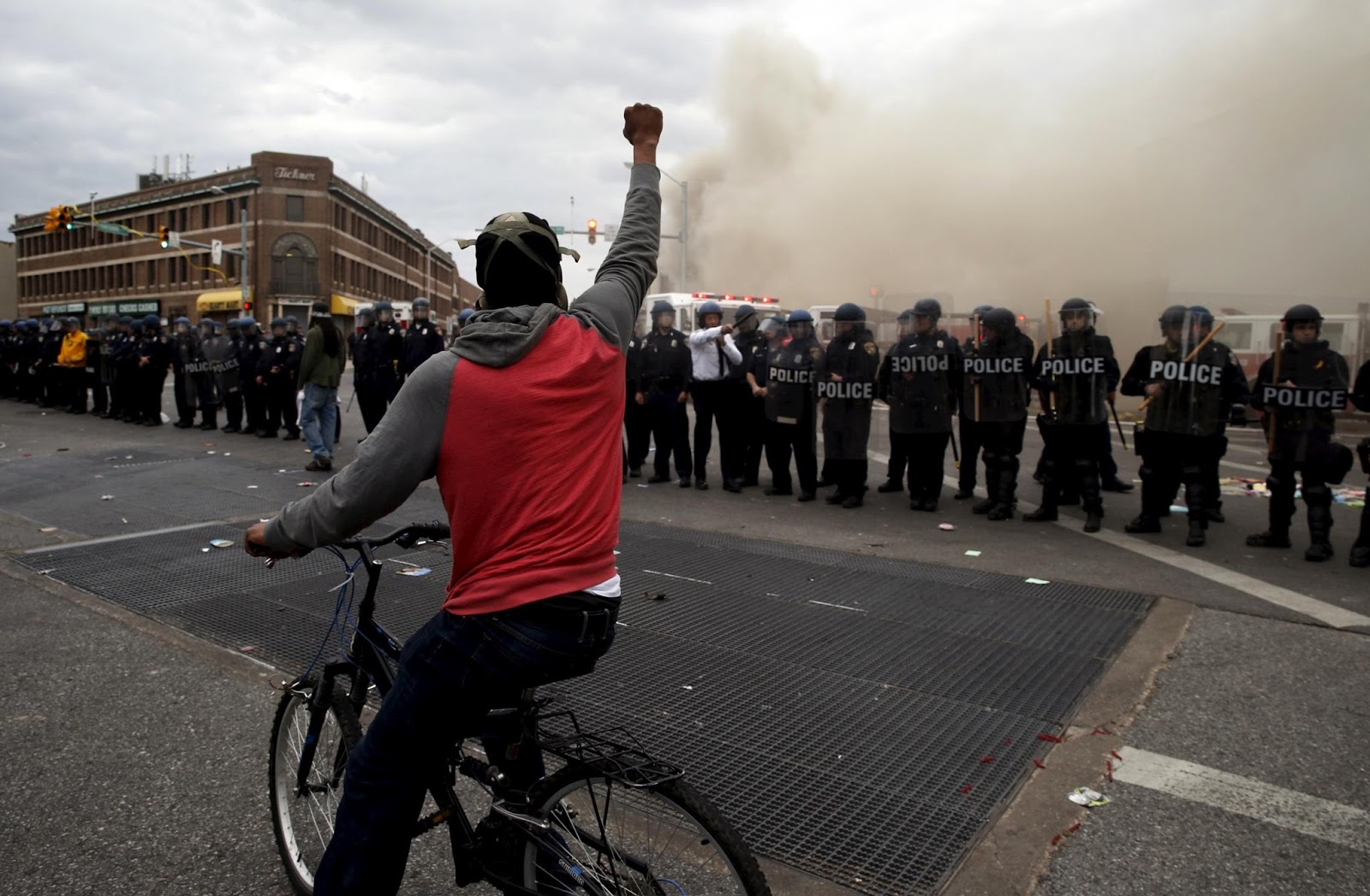
La Sha: "On Baltimore"

I came across the following on Facebook this week. Of all the things I've read about Baltimore so far, this takes first prize in my totally unofficial non-competition process. I'm grateful to La Sha for giving me permission to re-post it here. 

On CVS:
I remember when People's Drug Store became CVS. My mother would give me a dollar everyday to spend after school, and on our way home, my sister and I always stopped at CVS. I loved SweetTarts. When I graduated and changed schools, there was no CVS near my new school. So I got my SweetTarts from the corner store.

When I changed schools, I got a new teacher and new friends. Really, they were just new versions of my old friends and teachers. Same problems, same love, same fears, just a new building. They were my community. Not CVS. I never went to CVS to feed my mind, soul or spirit, just my sweet tooth.

And when I watched CVS looted and burned on TV, not one tear did I shed -- maybe a little jealously since I couldn't be there to make off with some of those SweetTarts, but I digress. That drug store, that business, that symbol of capitalist greed, that place where they hire the people in the community and pay them $8 an hour while they exploit the fact that the people of that community have no place closer to buy groceries so they have to pay more or go without, that brick and mortar where they pump more narcotics than the boys from The Wire, where they don't offer cures but temporary soothing for dollars, where they take money from the people and give it to their shareholders without any reinvestment into the people who make it, that place meant not a fucking thing to me.

Unless with all the chips, toothpaste, prescriptions and cotton balls they're selling, they start giving away fucks free, watching CVS destroyed gave me no more pain than a piece of lint falling on my head.


Thursday, April 30, 2015

Amelia Thomson-DeVeaux: "Armed Resistance in the Civil Rights Movement"


Charles E. Cobb (left) and Danielle L. McGuire

Originally published in The American Prospect.

On his first visit to Martin Luther King Jr.’s house in Montgomery, Alabama, the journalist William Worthy began to sink into an armchair. He snapped up again when nonviolent activist Bayard Rustin yelled, “Bill, wait, wait! Couple of guns on that chair!” Worthy looked behind him and saw two loaded pistols nestled on the cushion. “Just for self-defense,” King said.

In his new book, This Nonviolent Stuff’ll Get You Killed: How Guns Made the Civil Rights Movement Possible, Charles E. Cobb, a former field secretary for the Student Nonviolent Coordinating Committee and a visiting professor of Africana Studies at Brown University, explores what he sees as one of the movement’s forgotten contradictions: Guns made it possible. According to Cobb, civil-rights leaders recognized that armed resistance was sometimes necessary to preserve their peaceful mission. Guns kept people like King alive.

Danielle L. McGuire, an assistant professor of history at Wayne State University, argues that armed self-defense was also far more common for black women in the South than has generally been acknowledged. In her 2010 book, At the Dark End of the Street: Black Women, Rape, and Resistance, McGuire contends that the decision by women to combat sexual abuse and violence—sometimes with force—was one of the sparks that led to the modern civil-rights movement.

On the 50th anniversary of Freedom Summer [in 2014], McGuire and Cobb discuss the legacies of nonviolent resistance and community organizing—and how hidden histories complicate familiar narratives about the civil-rights movement.

Wednesday, April 29, 2015

Party for Socialism and Liberation: "Baltimore's Rebellion: What Happens to a Dream Deferred"


If the young people of Ferguson had not rebelled, Mike Brown’s name would have been forgotten. The town would still have the same mayor and police chief. The cops would still be fining and arresting Black people for every conceivable thing, including “Manner of Walking in Roadway,” “High Grass and Weeds,” and even bleeding on police uniforms during a beat-down. There would have been no Justice Department investigations or presidential commissions. If the young people of Ferguson had not rebelled, the city would be, for most of the country, just another dot on the map; just another forgotten impoverished Black community.
Now the whole world knows Ferguson. The people who rose up declare their hometown with pride. And now the whole world knows Baltimore and they will remember Freddie Gray’s name.

Tuesday, April 28, 2015

Henry Louis Gates: "Did African-American Slaves Rebel?"


Posted previously on PBS and BayAreaIntifada 

One of the most pernicious allegations made against the African-American people was that our slave ancestors were either exceptionally “docile” or “content and loyal,” thus explaining their purported failure to rebel extensively. Some even compare enslaved Americans to their brothers and sisters in Brazil, Cuba, Suriname and Haiti, the last of whom defeated the most powerful army in the world, Napoleon’s army, becoming the first slaves in history to successfully strike a blow for their own freedom.

Saturday, April 18, 2015

Albert Woodfox Waits


On April 8th, I drove up to the West Feliciana Parish Detention Center to visit Albert Woodfox, the last member of the Angola 3 to remain incarcerated. I have now visited this dear brother of mine in three different institutions over a period of six years and it is always painful, though the joy of seeing his face and knowing I have helped release him from his closed front cell for sixty celebratory minutes made it worth it.

They have outdone themselves this time. Home to only fifty or so prisoners, the building is dirty and old and reeks of a lick and a promise. Most of the prisoners appear to be on "work release," which means they have actual jobs one place or the other in St. Francisville, a town even smaller than the one I live in. And because of the minimum security level of the "institution," I actually ran into a prisoner taking out a bag of garbage -- outside the fence, across the street, and down a ways. Not the kind of place I'm used to seeing Albert.

Sunday, April 12, 2015

"Columbusing"


Yesterday, I posted that violence is not only as American as apple pie, but it's as White as the cotton picked by slaves and then by prisoners for the past four hundred years in what we call Louisiana. Today, I'll step aside and let Thomas Hill and Malachi Byrd tell you about another form of violence -- taking what ain't yours.

Saturday, April 11, 2015

Maybe We Need To Stop Acting White


You already know I quit blogging for months when  Ferguson blew up. And you already know why. But recently, I've begun to realize that something is happening to many of those whose views on life and power and race I most respect. I'm not sure what to call this X Factor I hear in their voices. But it resonates in my soul. And I don't know whether I'm more relieved that I'm not smoldering alone or more concerned about the greater implications of whatever is brewing inside us.

Actually, we are so bombarded by the consciousness of violence on a daily basis in this society, I sometimes worry I'm going to succumb to compassion fatigue and be found in a closet somewhere with my thumb in my mouth. Even if I'm not bleeding, I ache for those who do – all of them. And I’m hardly the only one.

So we're all on the same page here, right? We're all against violence. We abhor the shooting of a legislator, the killing of a little girl because she was in the wrong place at the wrong time, the heart-breaking homicides of one young Black male after another by other young Black males, military veterans returning from war only to commit tragic attacks on their own families, young people committing suicide at unprecedented rates. We hate all this, don't we? Of course, we do!


Friday, April 10, 2015

Aaron Hanlon: "Racism's Sinister Word Games ~ What a White Supremacist Talking Point Tells Us About Modern Politics"


Re-posted from Salon.com (3/20/15)
In a striking recent video interview, a Guardian reporter presses Pat Godwin, president of Selma, Alabama’s United Daughters of the Confederacy, on the question of whether viewers are right to assume Godwin’s expressed views are racist. Godwin replies, “Well, you have to define ‘racist’ to me. What is a racist?” Godwin’s subsequent comments demonstrate that her question is mainly rhetorical, a gesture meant to indicate that “racist” is too subjective a term to carry any weight, ever. For Godwin,
“The word ‘racist’ is, like I say so many times, is like beauty; beauty is in the eye…the eyes of the beholder. Well, if someone is defining racist or racism, it all depends on who’s defining it, because it’s their opinion. It’s their opinion. I’m a racist in the sense that I’m white, I was born white, I’m proud to be white, I believe in my race, I want to see it perpetuated, I want it to survive on this planet. I defend, protect, and preserve my white race.”
When the reporter turns to one of Godwin’s associates and asks him, “Are you racist as well?” he fires back programmatically: “Define racism.”

Thursday, April 09, 2015

Which Of These Is Not Like The Others...?


None of them. They're all the same. And they are not the problem.

The problem is White Supremacy. That's what puts men like these in uniforms and gives them permission to kill.

The solution to this problem is to dismantle White Supremacy.

This is not a complicated idea. But the process of doing it may be.

Wanna help?

Wednesday, April 08, 2015

Brit Bennett: "I Don't Know What To Do With Good White People"


Re-posted from Jezebel (12/17/14):

I don't know what to do with good white people.

I've been surrounded by good white people my whole life. Good white people living in my neighborhood, who returned our dog when he got loose; good white teachers in elementary school who pushed books into my hands; good white professors at Stanford, a Bay Area bastion of goodwhiteness, who recommended me M.F.A. programs where I met good white writers, liberal enough for a Portlandia sketch.

I should be grateful for this. Who, in generations of my family, has ever been surrounded by so many good white people? My mother was born to sharecroppers in Louisiana; she used to measure her feet with a piece of string because they could not try on shoes in the store. She tells me of a white policeman who humiliated her mother by forcing her to empty her purse on the store counter just so he could watch her few coins spiral out.

Tuesday, April 07, 2015

Federal Judge Goes On the Record About Lynching in Mississippi

Re-posted from National Public Radio:

Here's an astonishing speech by U.S. District Judge Carlton Reeves, who in 2010 became the second African-American appointed as federal judge in Mississippi. He read it to three young white men [on Tuesday, February 10th,] before sentencing them for the death of a 48-year-old black man named James Craig Anderson in a parking lot in Jackson, Miss., one night in 2011. They were part of a group that beat Anderson and then killed him by running over his body with a truck, yelling "white power" as they drove off.

The speech is long; Reeves asked the young men to sit down while he read it aloud in the courtroom. And it's breathtaking, in both the moral force of its arguments and the palpable sadness with which they are delivered...A warning to readers: He uses the word "nigger" 11 times.

Monday, April 06, 2015

African American Policy Forum: Breaking the Silence


I thought I was going to post these various things in some kind of rational order, but after watching this video from the website of the African American Policy Forum, I see it's not going to be that kind of party. There is truly beautiful, truly important, truly well conducted work that is being done around the world every moment that we breathe. We each have our place in that world. My place, apparently, is to sometimes speak and sometimes listen; sometimes be on the stage and sometimes be in the audience or even providing the stage.

Watch this film. Then watch it again. And keep on watching it until you have no more tears left, until your sadness is overtaken by rage and your rage burns off like alcohol, leaving only the raw power with which we are all born, power that has been waiting all this time for us to understand from the depths of our souls that we do not need anyone's permission to feel it.

Sunday, April 05, 2015

Well, Hello There. My, It's Been A Long, Long Time...


It's been almost five months since I posted here. I've laid low before since I started this blog over nine years ago, but not this low and never for this long. I make no apologies. What happened in Ferguson put me under the bus for a while. I was angry. I was depressed. I was frustrated. I was frightened for the young Black activists who were rising up angry (I remember what happened in earlier times and there is plenty to be frightened of). But I knew it wasn't permanent. I just didn't know when I would sit back down and write.

The fact is: the YouTube video I posted on November 17th featuring folks in Ferguson said so much so well, I didn't really have anything to add.

Yet here I am again. Finally. Hopeful that someone out there will hear me bumping around in the dark and turn the light on.

I've been saving things I found along the way to post when the time came to return and there are quite a few of them, actually. So I'll spend Spring Break cleaning out the closets, as it were -- going through the list of links, deciding which to delete and which to post as I first intended, setting the stage to become a more regular writer again.

But before I do that, I'm going to post a rant I saw on Facebook the other day. It was written by Eduardo Bonilla-Silva (a pretty famous guy who teaches at Duke University and writes important books like Racism Without Racists when he's not posting rants on Facebook). Lest you worry that I'm poaching, I asked for and received his permission to present his words here before I did it.

Monday, August 18, 2014

John Oliver on the Nazi-fication of the Police in the United States


I am so furious and horrified about what is happening in Ferguson, Missouri, that I can no longer bear to follow the news. But John Oliver got me to watch this 15-minute clip by reminding me that one can tell the truth, make the power visible, and speak the truth to that power, all while making those in power look just as insane as they really are.

Tuesday, August 12, 2014

Rest in Peace, Michael Brown


Labi Siffre tells us why those cut down in their youth by run-amok "authority" figures must not die in vain. He came out of self-imposed retirement in 1985 to write and perform this song after seeing a South African film clip of a White soldier shooting at Black children.

Sunday, August 03, 2014

Get On Up!


I woke up this morning already knowing I was going to see "Get on Up", the new James Brown movie that opened this weekend ("in a theater near you!"). When I read the backlash on Facebook against the movie for being made by White folks to the exclusion of Black film-making professionals other than the actors, I dismissed it, frankly. I get it. Believe me, I know there are Black professionals who can do anything a White person can. And I know Black folks are sick unto death of White folks making money from exploiting them in one way or another. It's gone from slavery to private prisons with sports and entertainment folded in for good measure. And I make it a  point to buy books and films written and produced by talented Black creators for just that reason. But I'm not going to disrespect the Godfather of Soul for anybody. And that's all I'm gonna say about that.

Anyway, while I was thinking about all this, I came across an essay by Kevin Alexander Gray entitled "The Soul Will Find a Way" (re-posted after the page break below). It was published several years ago on Counterpunch and it's about James Brown, but in order to do proper justice to the subject, Gray had to go deep and stay long. He wrote about growing up in a rural county in South Carolina (where Brown was also from). He wrote about being poor and Black. He wrote about love and violence. He wrote about funk and pain and glory. And by the time he cut me lose, I was limp and sweaty and remembering my youth.

See, the thing is I was born on top of a mountain in Southeast Kentucky to a pretty young woman with a knockout body and the newly returned soldier she married for his allotment check. Eventually, she told me she thought he would never come back, but life disappointed her that way many times as the years went by. And between the two of them, they made my life strange and sometimes hellish and what doesn't kill you makes you strong, they say.

I learned early what women are for in Appalachia and the buried knowledge made me tough, as buried knowledge will. But I was too intelligent to be able to accept my lot in life and so I shut myself off from other people except on the most superficial levels. And in one way or another, I have spent most of my days on Earth in that space.

Though he was writing about Black folks, Gray's essay took me back to my roots because I'm a woman from Appalachia who discovered the Black community like an explorer looking for a land she had only heard of once in a lullaby. I've never understood it all. Why I felt so drawn to include and be included by those I was forbidden to know. Why I bulldozed the boundaries between us and walked out onto the dance floor with my Black partner in 1961 when I was barely more than a child. Why I felt more comfortable with Black folks than with "my own people." Why I wound up bearing a bi-racial child out of wedlock in my thirties. How and why I learned to cross the great divide DuBois called the Color Line until my soul belonged where my skin never could.

The cost has been great because I became one of the "regulars," and not always because I was wanted. Like the feral cat that keeps trying to run into the house when you open the door, I refused to take no for an answer. And I can't explain it.

"You're not really White," I've been told for decades. Black students tell me they come to sit in on my classes sometimes to "get in touch with their Blackness." Black student groups ask me to speak or sit on panels because, they tell me, "you say things that need to be said, but nobody else will say them." And my loneliness after accepting the hugs from one after another before I leave the building is palpable.

But I remember the moment in time when the lightening struck. I was seventeen and had been ushering for plays at the theater in our city so I could watch them for free. As a reward, we were offered the perk of ushering for the Dick Clark Show that was passing through town. The show was jam-packed with popular stars of the moment and as I sat in the dark mezzanine watching Paul and Paula, Gene Chandler, and The Ronettes, I was enjoying it all, but I was my usual reserved self. Until The Tymes, I think it was, came out and performed one of their hits and swung me out into the Universe never to return.

It wasn't their voices that did it. It was the dance routine. Four Black men moving in perfect synchronicity and from somewhere deep inside me, I suddenly felt a scream rip its way up through my body and burst from my open mouth. I lost my cool completely in a way that never happened again. I never forgot that moment and I never recovered from it. But I didn't really understand its significance until I read Gray's essay and then it all came together. Four men descended from Africa, down through four hundred years of pain and anguish that produced a strength so beautiful that it was grace incarnate in African-inspired choreography. And the spirit that brought them through the fire, bringing the music with them, reached out and touched the spirit in my soul.

Twenty years later, a Black woman I had just met told me she knew the minute she saw me that I had been "shocked by the culture." Today, as I read Gray's essay and watched Get On Up and reconnected with my own personal journey of music and dance, the celebration of life I felt encompassed all the kaleidoscope of feelings that take a human into the fullness of their being. I am grateful for whoever it is I am and I am endlessly grateful for the knowledge that I am not, after all, alone.

James Brown and Kevin Alexander Gray and millions of others living and dead walk with me. And I with them.

Wednesday, July 30, 2014

Anthony Hamilton: "Comin' From Where I'm From"


I'm posting this not because Anthony Hamilton is mega-talented (which he is) and not because all Black men have had exactly this experience (which they haven't necessarily) and not because I want to paint all women as disloyal and dysfunctional, with issues (which depends on a bunch of stuff, not the least of which is the patriarchal socialization with which we're all infected). I'm posting it because the emotions Hamilton is demonstrating here are about more and deeper than we want to think about.

White folks -- and even plenty Black folks -- want to bury this knowledge and pretend that "success" for Black men in America is just a matter of pulling their pants up and talking "proper" (White) English. It's way, way more complicated than that. And we all know it. Props to the Black men who keep on keepin' on. Somehow.

Change is constant. And nothing. lasts. forever.

Tuesday, July 29, 2014

Angela Davis on Palestine, G4S, and the Prison Industrial Complex


With Israel's aggression against Gaza currently demanding our daily attention, here is a YouTube video of Angela Davis speaking in Great Britain last year about Palestine, G4S (a hyper-security enterprise operating now in 120 countries), and how both relate to the treatment of undocumented immigrants and the prison industrial complex. It starts out slow, but hang in there. I promise you that you won't be sorry.

The department and university where I teach are bringing Angela Davis to our campus to speak this fall and I, for one, am very excited at the prospect. She is one of my heroes for a range of reasons, has been for a long time, and continues to raise the bar for me as the years go by. I give you Angela Davis.

Monday, July 21, 2014

Sunni Patterson: "We Made It!"


I have posted this before, but this needs to be viewed again and again. Because it's true. And true is as good as it gets.

Sunday, July 20, 2014

Martin Luther King, Jr.: "We're Coming To Get Our Check."


This is a short clip that will help you to understand why Martin Luther King, Jr., was shot by an off-duty police officer to stop him from kicking off the Poor People's Campaign. At the time of this speech, the Campaign was gearing up to march poverty-stricken people -- of all skin tones -- across the country and right into Washington. The woman you see after the clip of MLK speaking is Black Panther Kathleen Cleaver adding her two cents worth.

Thursday, July 17, 2014

Morris Dees: "We Should Call It What It Is"

From time to time, I read or hear about how some White people are perceived by some People of Color as having made a career out of fighting racism, benefiting economically or otherwise from their work which is seen as taking away from Black people who should be getting all the attention related to (and any benefits of) the struggle against White Supremacy. Indeed, Malcolm X once told a young White woman that there was "nothing" she could do to help his cause. But in his famous speech on "The Ballot or the Bullet" in 1964, he also said, "We will work with anybody, anywhere, at any time, who is genuinely interested in tackling the problem head-on." Later, that same year, in a speech at Oxford University in England, he said, "And I, for one, will join in with anyone -- I don’t care what color you are -- as long as you want to change this miserable condition that exists on this earth."

I've been paying attention to and supporting the work of Morris Dees and the Southern Poverty Law Center in Montgomery, Alabama, for decades. Today, Dees sent out the following statement related to the continual and continuing attacks on President Barack Obama because of his skin tone. I think it states the case succinctly and I'm re-posting it here.

Tuesday, July 15, 2014

Speaking Truth To Power


Melissa Harris-Perry presented a segment on her television program recently featuring Tianna Gaines-Turner, a young Black woman who testified before a Congressional Committee on the struggle of living in poverty. Folks like Harris-Perry and Congresswoman Barbara Lee -- who are Black women, y'all, in case you still think it can't be done -- use their position and voices to empower others. Here's to speaking truth to power, no matter who you are. And here's to Tianna Gaines-Turner for proving yet again that ordinary humans, given the opportunity to step into the limelight, can shine like stars.

Sunday, July 13, 2014

"Shell Shocked"


A couple of months ago, I came across "Shell Shocked", a new documentary about African-American youth who are growing up -- and dying young -- in New Orleans. I checked out the trailer, ordered my copy immediately, and then sat on it for months while I was screwing up the courage to watch it.

I could tell by the trailer it had been well done. And I already knew what to expect since I live 45 miles from New Orleans and have taught literally hundreds of students who commute from there on a daily basis. I spend a good bit of time every semester, in fact, working my butt off to help shell shocked Black youth hang in there another day while they're trying to overcome the effects of their experiences, which are sometimes on-going.

Young men come into my office on a regular basis, shut the door, and weep as they wrestle with their pain and their feelings of helplessness, hopelessness, and even terror that, despite their determination and their dreams, they won't live to graduate. Some, as they approach graduation, stress about younger brothers and sisters or come in to grieve the loss of yet another family member or friend.

Saturday, July 12, 2014

Playing for Change: War/No More Trouble


A couple of weeks ago, a specialist put me on insulin injections four times a day. While the process of trying to stabilize this new reality is careening through my life on a physical, psychological, and emotional roller coaster, I'm often in odd states of one kind or another. It's making ordinary daily affairs (like blogging) a bit trickier than usual. In the meantime, one thing I'm clear on: there's too much injustice, too much cruelty, and way, way too much war. I'm gonna work at stayin' alive, y'all. Let's work together to make sure there's a world we can stay alive in. Shall we?

Monday, July 07, 2014

Mississippi Freedom Summer: Bob Moses on Reality Asserts Itself


Part 1

There's a new news source in Baltimore, Maryland, operating as The Real News. It appears to intend to become a formidable contender for our attention and they certainly got mine recently when they ran a series of film reports I knew immediately I must watch and share with you. The series is called "Mississippi Freedom Summer" and features Bob Moses, who was an organizer with the Student Non-Violent Coordinating Committee back in the day, being interviewed by Paul Jay on his program "Reality Asserts Itself."

I waited until they were finished with the whole series so I could upload it all in one post. I don't know what you're going to do, but I had to watch all nine segments one after another because it's that good. It takes us back to 1964 and captures for us in the present a modicum of the tension the civil rights workers had to live in and with during those demanding times.

Friday, July 04, 2014

A Note To Flag Wavers On The 4th Of July

In case you haven't noticed, I'm not your typical "patriot." I don't believe this country has been Numero Uno in any particularly positive way for a long time, if ever. I know what the reality of our unvarnished history as a nation has been and it hasn't been pretty.

On the other hand, I don't want to live anywhere else at this point in time. I like my creature comforts. I just don't think they're more important than life -- my own or anybody else's. I'm happy to pay my taxes. I do wish the government would spend my share on things that meet the needs of the population and address issues of human sustainability instead of trying to bully other nations (because it never ultimately works) or funding local SWAT teams to kick people's doors down unnecessarily.

So I'm pretty low key on July 4th. I don't even own a flag. And I despair of folks who fly them after dark, in the rain, and when they're tattered (all of which are blatant breaches of flag etiquette). I'm grateful I'm a U.S. citizen, but maybe being born into a dysfunctional family teaches you early on how to love an institution you really can't celebrate. And, anyway, I'm clear as a bell that the government is not the nation.

But many U.S. citizens (a goodly portion of which will be in the streets in one way or the other today) don't feel the same way I do. They'll be wearing red, white and blue. They'll be flying plastic flags from their car antennas. And they'll be singing "God Bless America" and "The Star-Spangled Banner" at the top of their lungs (no matter how far off key). This post is for them.

Monday, June 30, 2014

For Tonight and Forever: American [R]evolutionary Grace Lee Boggs


Last night, I got the opportunity to preview a film that debuts on PBS stations nationally tonight. The title is "American Revolutionary: The Evolution of Grace Lee Boggs" and it's only an hour and twenty minutes long, but it took me over two hours to watch it because I kept pausing the film to make sure I didn't miss a single minute while I was writing stuff down. Six pages of stuff. Not so much "notes" for this post as quotes I want to remember. "American Revolutionary" is more than a film; it's an experience. And Grace Lee Boggs is more than a 99-year-old revolutionary. She's a force of nature.

Sunday, June 29, 2014

Rev. Osagyefo Sekou: "The Master's House Is Burning -- bell hooks, Cornel West, and the Tyranny of Neoliberalism"


I'm not sure why, but many intellectuals make a lot of people nervous. In my not so humble opinion, intellectuals are not necessarily more intelligent than other people. In fact, I've known some who were not even particularly bright, if you know how to tell the difference. They just use bigger words or more complicated sounding reasoning because they learned how to do that and, in the process, developed an exaggerated perception of their ability to prove it -- without, unfortunately having anything worth saying to add to the conversation.

On the other hand, some intellectuals -- no matter how much they intimidate their listeners -- are not trying to and truly do have some knowledge to drop. bell hooks and Cornel West are two such intellectuals. Nevertheless, from time to time, for whatever reason, somebody who either can't or simply doesn't want to understand what they're saying tries to take a pot shot at something they've said. Last month, Truthout.org ran an op-ed piece by the Rev. Osagyefo Sekou addressing some criticisms against them and, in the process, not only clarified their ideas, but added a few of his own. I give you:

"The Master's House Is Burning: bell hooks, Cornel West, and the Tyranny of Neoliberalism"
by Rev. Osagyefo Sekou

Dee-1 on Jay, 50 and Weezy


Music, literature, food, clothing, and language (including slang) are all part of our shared and very popular culture. Pop culture bobs and weaves, shifts and changes, adds and subtracts, reaches back and jumps forward in all directions and constantly. And in doing so, it continually spins our human tale of woe and glory. Here's one man who believes it's time for us to take a hard look at where we are and where we maybe need to be instead.

Wednesday, June 25, 2014

Diriye Osman: Why We Must Tell Our Own Stories


Somalia has appeared in the U.S. news often in the last year or so. When I read this essay by Diriye Osman, I knew immediately that my readers needed to see it, as well, to develop a better, more complicated, and more beautiful perspective on this culture and its diverse population and what at least one Somali writer has to share with us about the human condition there, here, and everywhere.

"Why We Must Tell Our Own Stories"
by Diriye Osman

Monday, June 23, 2014

Using Public Schools To Make Sure White Supremacy Continues


One of the things I pay a lot of attention to in the parish where I live is the fifty-year long process of refusing to racially integrate the public schools so that every student will get the same quality of education. By this I mean adequate books, libraries, equipment, fully trained culturally competent teachers and administrators representing all ethnic groups in the region, and school disciplinary policies that reflect a commitment to embracing all children to maximize their potential as future citizens. This is not currently happening and has at no point ever happened here, as 5th Circuit Judge Ivan Lemell will attest.

It's not reassuring to discover that we're not the only ones. And, unfortunately, it's not encouraging that we're hearing more about what is being called the "re-segregation" of the public school system nationally. I have long since realized that the public being aware of stupid, mean-spirited, classist, sexist, and White Supremacist practices and policies will do exactly nothing to fix social problems until that same public understands that these practices and policies are causing and will continue to cause problems for all of us in several ways.

Saturday, June 21, 2014

If Black People Said The Stuff White People Say


I've been on hiatus for nearly two months now and y'all just sit patiently (as it were), knowing I'll be back, knowing this blog is my partner for life, knowing you're never far from my mind.

I crashed and burned again at the end of this semester. Worse than usual even. Depressed, exhausted, done, done, done. So bad I had to implement an actual campaign of recuperation. Reading novels. Watching Netflix. Taking afternoon naps. Talking to my therapist. Lying in the grass watching the clouds drift overhead. I even gave up coffee. And it still took weeks to begin to believe I might eventually return to the land of the living. (*shakes head ruefully*)

The good side to hitting bottom, though (and yes, Virginia, there is a good side to hitting bottom), is that it forces you to re-evaluate and even let go of some stuff, to change your perspective, to find a new level of self-acceptance, to embrace reality.

The subsequent problem, of course, is that when you begin to feel better, there is always the possibility -- if you're as OCD as I am after being raised with a performance standard that accepts nothing less than perfection -- you might pick up everything you let go of -- again. Hopefully -- this time -- I will not do that. Especially since, as was suggested to me the other day when I was getting a massage, if I don't learn to let go of the illusion that I must fix (and be in control of?) everything, I might have to come back and do this again to learn it (please, no!).

So, a couple of days ago, I posted the online Introduction to Sociology course I have to teach in July to pay my August rent. And I'm taking baby steps back to you today, hoping that I've learned my lesson. We'll see.